Welcome to: The Parent-to-Teacher Newsletter of Alinea-Home!
Many parents reach a point where the early excitement of homeschooling gives way to bigger questions about structure, independence, and long-term preparation.
Here, each week, my goal is to slow things down and help you think clearly as your homeschool continues to grow and mature (think middle/high school)—strengthening the systems that support stability, confidence, and thoughtful learning environments for both you and your children.
This is a place where things begin to make sense again.
This Week: From the Desk of Denise
Theme: The Year of Preparation for the Homeschool Parent
Part 2: "3 (more) Chapters from my book: How I Got Schooled Homeschooling"
What I’m sharing in this week's chapters isn’t a list of rules for how I established our home and school—it’s the philosophy that shaped our homeschool journey.
Over time, I learned to tie privileges to readiness, not age, and to approach each stage of growth with an intended purpose rather than assumption.
These chapters are a glimpse into how I was being “schooled” right alongside my children.
Note: In case you missed it:
Last week, I shared the first 7 chapters from my book How I Got Schooled Homeschooling.
If you would like to start from the beginning, you can read them here.
Chapter 8: No Dating Why the decision to delay dating—and what I focused on instead.
This was one of the more unconventional decisions I made as a homeschool parent.
And yes—it raised questions.
But for our family, this choice wasn’t about restriction.
It was about preparation.
In the early years, I realized something important:
dating, as it is commonly practiced, often emphasizes emotion before foundation.
So we focused on building the foundation first.
Instead of early dating, we prioritized:
- learning how to manage distractions and stay focused
- developing strong personal care and hygiene habits
- building the ability to communicate across multi-age groups
- practicing service within and outside the home
- understanding that relationships are not casual—they are directional
We had many conversations about this truth: why does dating today appear to be about social agreements rather than lifelong commitments?
Because of that, I encouraged my children to develop within first; learn how to be friends with each other first, before forming strong emotional allegiances outside of the family structure.
There were also practical considerations:
- limited income and transportation meant dependence on me - nope!
- financial priorities needed to be understood before dating
- I knew that spending money to maintain a relationship often replaced learning how to build one
So I shifted the focus.
Before pursuing a relationship, I introduced personal benchmarks:
- a plan for completing education
- an understanding of finances and financial portfolio-building
- long-term thinking about stability, responsibility, and ownership
This approach wasn’t always popular.
But it was intentional.
What this chapter explores:
- Why delaying dating can create space for deeper personal development
- The difference between emotional readiness and practical readiness
- How focus during the teen years shapes adult outcomes
- Why relationship preparation begins long before a relationship
Chapter 9: The Notebook Creating a safe space for hard conversations.
The middle and high school years brought a new layer to our homeschool.
Questions became deeper.
Topics became more personal.
And not everything felt easy to say out loud.
So I created something simple—but powerful:
This notebook became a private communication space between each of the children.
Whenever something felt uncomfortable to say directly,
we wrote it down.
No interruptions.
No immediate reactions.
No judgment.
Just honesty.
This allowed us to:
- ask hard questions without fear
- process thoughts before responding
- communicate in writing respectfully, even in disagreement
- stay connected during emotionally complex seasons
Sometimes the questions were about growing up.
Sometimes they were about decisions, boundaries, or curiosity.
And sometimes… they were things neither of us quite knew how to say, think, or bridge the knowledge gap—so we would say that and return to it after processing.
Nothing was ever stated out loud – only in written form.
The notebook gave us time.
Time to think.
Time to respond with empathy and intentionality.
Time to listen beyond emotion.
What I did not expect was how much this would strengthen our relationships.
It built trust.
It created consistency.
It removed pressure from difficult conversations.
And most importantly—it kept communication open during these multi-faceted growth and intellect shifts.
Even when it was hard.
What this chapter explores:
- Why communication changes during the teen years
- How to create a judgment-free communication system
- The power of written expression in parent-child relationships
- How small tools can build lasting trust
I didn't know it at the time, but these have become my most treasured pieces of recorded writing for our entire season of homeschooling. Priceless!
A simple place to begin…
If you’re reading these chapters and wondering “Where do I start?” or "How can I refresh our homeschool?"—start with your home.
I created the Home Walkthrough as a practical first step to help you turn your everyday spaces into a supportive learning environment—without overwhelm.
It’s simple, intentional, and designed to help you see your home differently.
Chapter 10: Chores Turning everyday questions into life skills.
Chores in our home were not assigned randomly.
They were introduced through curiosity.
Whenever my child asked, “What is that for?” or “Whatcha doin’?”
I saw it as an opportunity—not just to answer, but to teach.
That question became an invitation into responsibility.
Instead of giving a quick explanation,
I connected the task to a purpose:
- how the home functions
- why certain routines matter
- what it means to contribute to a shared space
Our mornings often began at the kitchen table before school.
We used that time to:
- talk through the day ahead (e.g., read a portion of the common read or have time to read, math speed drills, celebrations, etc.)
- clarify expectations
- walk step-by-step through any chores or schoolwork that felt unclear
- revisit anything that had been misunderstood
Then, they left the table to start their individualized day of learning.
There was no assumption that a child “should already know.”
I taught it. I modeled it. I practiced it.
Over time, chores became less about completing tasks, and more about building awareness, discipline, and ownership.
Because managing a home is not instinctive.
It is learned.
And those small, daily responsibilities quietly prepared each child
for something much bigger:
The ability to care for their own life.
What this chapter explores:
- How curiosity can guide responsibility
- Why teaching the “why” behind chores matters
- The role of routine conversations in building independence
- How home management becomes a foundational life skill
Well, that's it for now. I was thrilled to share how our homeschool developed through the years. I anticipate the book to be ready, for sure, by the end of summer. I will keep you posted!
A Sneak Peek into Next Friday's: From the Desk of Denise
As we move into May, a new season begins.
From the Desk of Denise will be taking on a new direction—one that’s been growing behind the scenes over the past few years.
What began as weekly encouragement and insight into homeschooling is becoming something more structured—designed to support you step-by-step as you prepare for, and maintain, your homeschool with intention.
I will be reintroducing myself and walking you through what’s ahead.
For now, enjoy this final glimpse into the stories that helped shape it all.
Something meaningful is coming.
Until we meet again, feel free to share which chapter resonated with you. I would love to hear!
Happy learning,
Denise
A Supplemental Resource for You!
Home Walkthrough Guide
|
As your children mature and academic expectations increase, the home itself must also evolve to support deeper learning and greater independence.
One of the most helpful steps you can take is simply to look at your home with fresh eyes—not as it has always been, but as the learning environment it is becoming.
If you would like a practical way to begin rebuilding flow and structure in your home, the next step I recommend is the Home Walkthrough Guide.
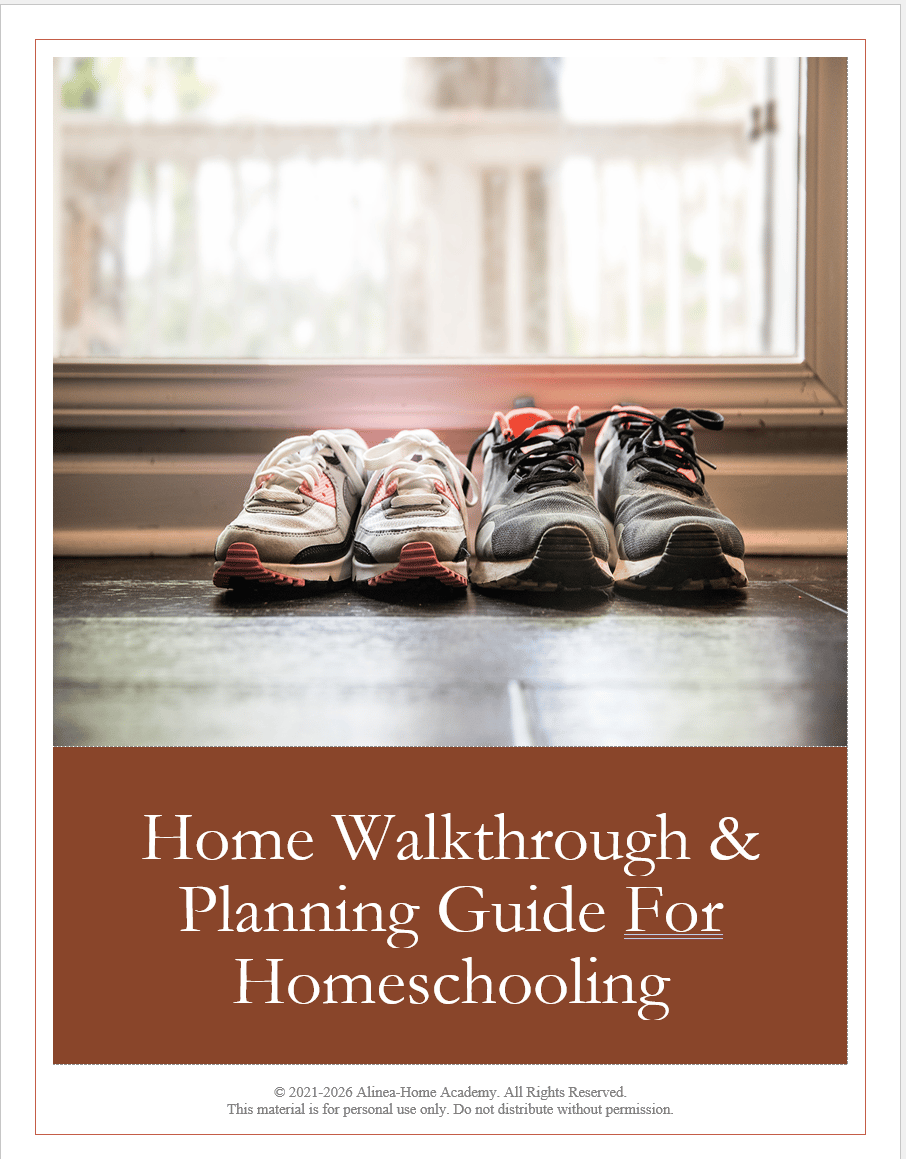 |
$37.00
Reimagining Your Home for Learning
Inside this guide you will:
• Walk through each space of your home with fresh eyes for change.
• Identify environment... Read more |
This simple guide helps you step back and look at your home environment, room by room and routine by routine, so that your daily life once again supports the kind of learning culture you want to continue building.
Many parents are surprised to discover that small adjustments in the home environment can restore calm, focus, and confidence to their homeschool days.
You can explore the Home Walkthrough Guide HERE:
|
P.S. If you know a homeschool mom who is feeling overwhelmed, feel free to share the newsletter with her. A little quiet confidence at the right moment can make all the difference.
Thank you!
Denise
Educationally, Dr. Denise Perdue Founder, Alinea-Home Parent-to-Teacher Academy for Homeschooling
