Welcome to: The Parent-to-Teacher Newsletter of Alinea-Home!
Many parents reach a point where the early excitement of homeschooling gives way to bigger questions about structure, independence, and long-term preparation.
Here, each week, my goal is to slow things down and help you think clearly as your homeschool continues to grow and mature (think middle/high school)—strengthening the systems that support stability, confidence, and thoughtful learning environments for both you and your children.
This is a place where things begin to make sense again.
This Week: From the Desk of Denise
Theme: The Year of Preparation for the Homeschool Parent
Part 1: "7 Hard Lessons I Learned as a Homeschool Parent"
Since this upcoming academic year is The Year of Preparation for the Homeschool Parent, I wanted to give you a glimpse into the book I am finishing that will be released this summer when the academy opens.
The book is titled:
How I Got Schooled Homeschooling!
14 Homeschool Lessons I Learned the Hard Way (But you don't have to!)
In it, I describe the lessons that reshaped how I thought about education, home management, and responsibility.
What surprised me most was this:
When a home does not have a strong management structure, small gaps begin to surface very quickly.
Homeschooling has a way of revealing them.
The moment someone learns I was a homeschool mom, three questions almost always follow:
- “But why? Why did you decide to homeschool?”
- “Did you tell anyone before you decided? What did they say?”
- “Your degree will help you. Remind me… you do have a college degree, right?”
These questions are understandable.
Homeschooling is often viewed as a leap into the wilderness.
But what I discovered was something far more surprising.
Homeschooling did not just educate my children.
It educated me.
Below are seven of the early lessons/chapters that shaped our homeschool before my children entered middle, high school and beyond.
Chapter 1: Teaching Reading Taught Me to Read Better
How becoming my children’s reading teacher transformed my own literacy.
When I began homeschooling, one thought guided me strongly:
I could not imagine someone else teaching my children how to read.
What I did not expect was that teaching reading would strengthen my own literacy skills as well.
What this chapter explores
• Why teaching reading changes the parent as much as the child
• The connection between teaching and deeper comprehension
• How literacy grows through instruction
• Why parents often underestimate their ability to teach reading
Chapter 2: Literacy Must Be the Spine of the Curriculum
Why reading, writing, and thinking had to drive every educational decision we made.
Living in a country that depends on innovation and productivity made one thing clear to me:
Literacy could never be treated as a secondary skill.
Every curriculum decision had to strengthen the ability to think, read, and communicate.
What this chapter explores
• Why literacy drives every other subject
• How curriculum choices shape intellectual development
• The difference between activity-based learning and literacy-based learning
• Why strong readers become strong thinkers
Chapter 3: Homeschooling Requires a Household System
Why learning at home cannot survive without structure.
I quickly realized something many homeschool parents discover the hard way:
Homeschooling is not simply school at home.
It requires a household structure that supports learning every day.
What this chapter explores
• Why home management affects learning success
• The role of routines, schedules, and systems in adulthood
• How household chaos interrupts education
• Why the home must become a learning environment
Chapter 4: Literacy Extends Beyond Books
Understanding the many forms of literacy that we and our children must develop.
At first, I thought literacy simply meant reading books.
Over time I realized it included far more:
Cultural literacy.
Financial literacy.
Technological literacy, and more.
Nearly every experience in our home became a teachable moment.
What this chapter explores
• The different forms of literacy children need
• How everyday experiences build knowledge
• Why conversations matter as much as textbooks
• How families can intentionally cultivate learning
Before we move on to the last three chapters, I want to remind you of an important supplemental resource: The Home Walkthrough Guide.
The strength of a homeschool rarely depends on curriculum alone.
It depends on the structure of the home itself.
That realization is what inspired the Home Walkthrough Guide I created for parents who want to intentionally shape their home environment into a place where learning can flourish.
|
If you have not downloaded it yet, you can access it here before continuing with today’s article.
And surprisingly, many of those lessons began when small gaps in our home structure started to surface. Now let's move on to Chapter 5.
Chapter 5: The Goal Was Never Just College
Why preparing my children for adulthood became the real objective.
Early in our homeschool journey, I thought my responsibility was simple:
Prepare my children to enter college.
Later, I realized the goal was much larger than that.
The real goal was preparing them for purposeful work and meaningful contribution.
What this chapter explores
• Why college should not be the only goal of education
• How career awareness can begin early
• The importance of developing skills and interests
• Why adulthood—not graduation—is the true destination
Chapter 6: Parent and Teacher Are Two Different Roles
Understanding the dual responsibility of homeschooling.
One of the most important lessons I had to learn was this:
Being a parent and being a teacher are not the same role.
As a homeschool parent, I had one responsibility:
• Managing a home where education could thrive
As a home-educator, I had two responsibilities:
• Designing a K–12 learning structure for my children
• Implementing the K–12 individualized learning structure for my children
These roles require different thinking, planning, and systems.
What this chapter explores
• The difference between parenting and teaching
• Why homeschool parents must think like educators
• How household management supports instruction
• The importance of designing a long-term learning plan
Chapter 7: No One Homeschools Alone
Why building a support system changed everything.
Homeschooling required skills I did not yet possess.
So I created what I now call a quad of support.
People who could guide me in areas where I needed growth.
My support system, the first two-years, included:
• someone who taught and helped me manage our household budget
• someone familiar with the military lifestyle
• someone who helped me grow intellectually through reading and conversation
• someone who taught me practical home skills like shopping, cooking, and cleaning
Building this support system made our homeschool sustainable.
What this chapter explores
• Why support systems matter for homeschool parents
• The difference between isolation and independence
• How mentorship accelerates learning
• Why community strengthens families
A Sneak Peek into Next Friday's: From the Desk of Denise
Part 2: "7 (more) Hard Lessons I Learned as a Homeschool Parent"
These lessons reshaped the way I thought about education, parenting, and responsibility.
But they were only the beginning.
Next week, I will share seven more lessons/chapters that changed the direction of our homeschool as my children approached middle, high school and beyond.
Many of these ideas are also part of the preparation you get to work through inside the Parent-to-Teacher Academy opening this summer.
Until we meet again, feel free to share which one resonated with you. I would love to hear!
Happy learning,
Denise
A Supplemental Resource for You!
Home Walkthrough Guide
|
As your children mature and academic expectations increase, the home itself must also evolve to support deeper learning and greater independence.
One of the most helpful steps you can take is simply to look at your home with fresh eyes—not as it has always been, but as the learning environment it is becoming.
If you would like a practical way to begin rebuilding flow and structure in your home, the next step I recommend is the Home Walkthrough Guide.
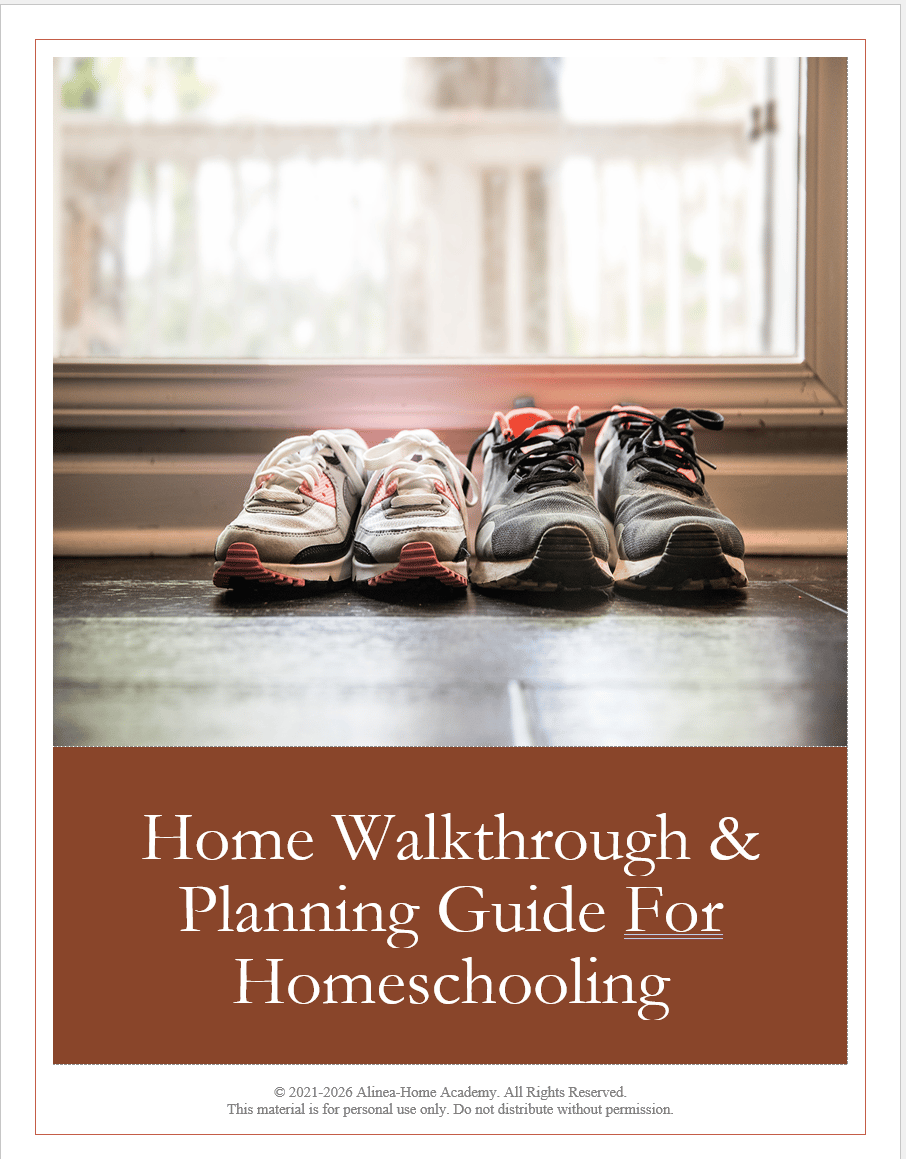 |
$37.00
Reimagining Your Home for Learning
Inside this guide you will:
• Walk through each space of your home with fresh eyes for change.
• Identify environment... Read more |
This simple guide helps you step back and look at your home environment, room by room and routine by routine, so that your daily life once again supports the kind of learning culture you want to continue building.
Many parents are surprised to discover that small adjustments in the home environment can restore calm, focus, and confidence to their homeschool days.
You can explore the Home Walkthrough Guide HERE:
|
A Conversation We Rarely Have in Homeschooling
Over the next three weeks, we are going to explore something that many homeschool families quietly experience but rarely talk about: the moment when the systems that once worked begin to lose their strength.
"Everything just seems to be so much more difficult than before."
Homeschooling evolves as children grow. What worked beautifully in the early years often needs to mature alongside them.
Throughout this series, we will look at a few of the most common places homeschool structure begins to weaken—and how parents can strengthen their home learning environment--once again.
P.S. If you know a homeschool mom who is feeling overwhelmed, feel free to share the newsletter with her. A little quiet confidence at the right moment can make all the difference.
Thank you!
Denise
Educationally, Dr. Denise Perdue Founder, Alinea-Home Parent-to-Teacher Academy for Homeschooling
